Dependent & Independent Variables in Science Experiments
Understanding how variables in science experiments work is an important skill for our students to understand. We do a lot of science experiments in my classroom, and knowing how different factors can change the outcome of a scientific experiment is always something I want them to be able to discover and explain. It’s also great practice for the scientific method. Here are some of the best ways to teach dependent and independent variables in your science classroom.

VARIABLES IN SCIENCE EXPERIMENTS: WHAT ARE THEY?
Here are definitions you can use with your students, using a plant growth experiment as a base:
- Independent: An independent variable is something that we change on purpose in an experiment.
- Example: If you are testing how different amounts of water affect plant growth, the amount of water is the independent variable because it’s what you change in your experiment.
- Dependent: A dependent variable is what we measure in an experiment. It’s the result that happens because of the change we made.
- Example: In the plant experiment, the growth of the plant is the dependent variable because it’s what you measure to see how much the plant has grown based on the different amounts of water.

My Independent and Dependent Variables Resource has a foldable, interactive vocabulary activity that helps students understand the concept of variables. In the resource, students also define what control variables are.
It’s important for our students to know the variable that we are changing and the variables that occur because of that one change. It’s also so important to make sure the kids understand how important changing only one thing is. We need to know what caused the outcome of the experiment, and that’s difficult if we change different variables.

DESIGNING EXPERIMENTS
Once students understand what variables are, we need to help them put this new vocabulary into action. That’s where experiments come in! I like to start with a premade experiment that guide students through how variables work in a real-world context. An easy experiment that I like to use with my students is What Will Make Ice Melt the Fastest?. Students work with three different materials that we have on hand in class, and they predict which substance will make ice melt the fastest. I like to use sand, water, salt, sugar, or anything similar. I also make sure students know we need a control group to see what happens when no substance is applied to the ice.

FOCUS ON THE VARIABLES
Students can sometimes get lost in the steps of an experiment and forget what brought the results about. For this reason, I make sure that my students can communicate to each other what the variables were and, more importantly, why each variable exists. For example, in the plant growth experiment, the goal is for my students to be able to explain that:
- the independent variable is the amount of water we’re using, because we are changing the amount on purpose;
- the dependent variable is the plant’s growth, because that will change based on the water we give it;
- the controlled variables are anything we don’t intend to change, which in this case could be the type of soil used, the type of plant used, the amount of light each plant gets, the type of liquid (we always use the same tap water), and so on.
To keep the focus even stronger, the students know that their exit ticket for the class will be for them to explain what an independent, dependent, and controlled variable is. You can have students define in it general, or you can have them provide examples based on the results of the experiment.
ANALYZE THE DATA
Once my students have correctly identified the different types of variables in an experiment, we analyze the data we collected. I want them to understand, and then be able to explain to someone else, how the independent variable affects the dependent variable. For example, in my What Will Make Ice Melt the Fastest? lab, students conclude that the salt melted the ice fastest. The constant variables were anything we didn’t change, such as how long we timed them melting and the temperature of the room. The final outcome of an experiment is important, and knowing the why behind the outcome is important too.

Understanding these variables helps students design good experiments and understand the results better when they go off and create their own scientific investigations. When our students know what we are changing (independent variable) and what we are measuring (dependent variable), they can make better observations and conclusions. Being able to analyze the results of an experiment is a great critical thinking developer, and students pick up scientific inquiry skills they can use throughout the year.
You can grab this entire lesson with everything made for you by clicking the picture below.

Save this post for later by clicking on the picture below.




 5th Grade Math Review | Differentiated Math Stations BUNDLE for the Year
 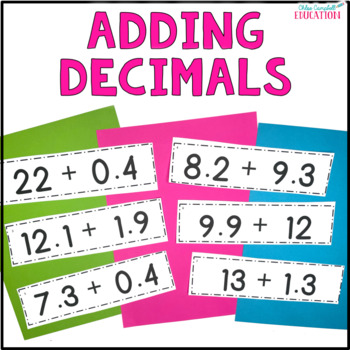 5th Grade Math Review | Differentiated Math Stations BUNDLE for the Year → Adding Decimals Differentiated Math Practice - 5th Grade Intervention Activity
 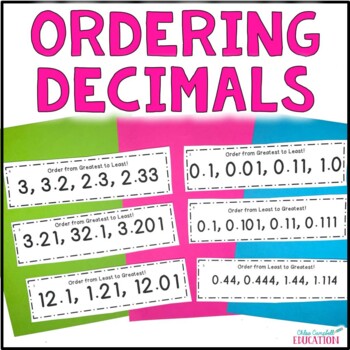 5th Grade Math Review | Differentiated Math Stations BUNDLE for the Year → Ordering Decimals Activity Comparing & Ordering Decimals Differentiated Practice
 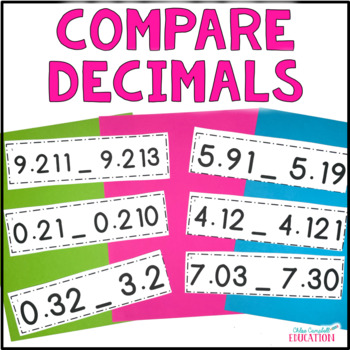 5th Grade Math Review | Differentiated Math Stations BUNDLE for the Year → Comparing Decimals to Hundredths Place Review Activities Differentiated Practice
  5th Grade Math Review | Differentiated Math Stations BUNDLE for the Year → Adding and Subtracting Fractions with Unlike Denominators Leveled Problems
 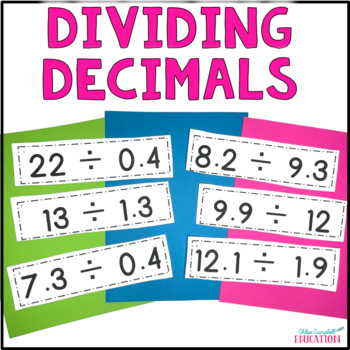 5th Grade Math Review | Differentiated Math Stations BUNDLE for the Year → Dividing Decimals by Decimals Practice - Differentiated 5th Grade Math Station
  5th Grade Math Review | Differentiated Math Stations BUNDLE for the Year → Dividing Fractions & Whole Numbers in 5th Grade Differentiated Math Center RTI
 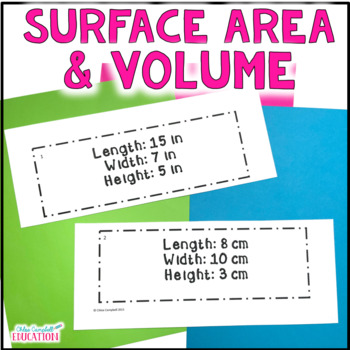 5th Grade Math Review | Differentiated Math Stations BUNDLE for the Year → Surface Area and Volume of Rectangular Prisms Leveled Problems - Math Station
 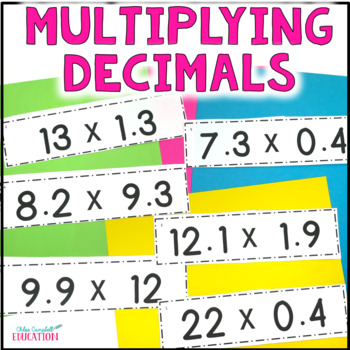 5th Grade Math Review | Differentiated Math Stations BUNDLE for the Year → Multiply Decimals by Whole Numbers & Decimal to Hundredths Intervention Activity
  5th Grade Math Review | Differentiated Math Stations BUNDLE for the Year → Order of Operations Leveled Problems Differentiated Math Stations - PEMDAS
 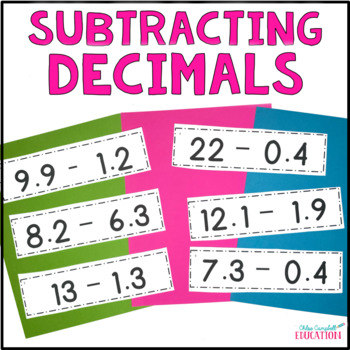 5th Grade Math Review | Differentiated Math Stations BUNDLE for the Year → Subtract Decimals Differentiated Practice 5th Grade Math Intervention Activity
 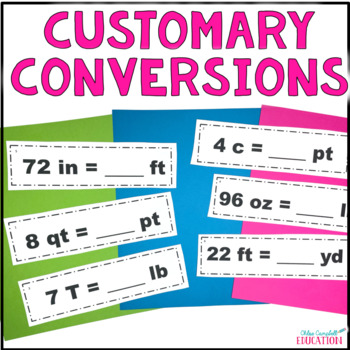 5th Grade Math Review | Differentiated Math Stations BUNDLE for the Year → Measurement Conversion Customary Units Leveled Problems - Differentiated Math
  5th Grade Math Review | Differentiated Math Stations BUNDLE for the Year → Multiplying Fractions Leveled Problems - Differentiated Math Stations 5th Grade
  5th Grade Math Review | Differentiated Math Stations BUNDLE for the Year → 5th Grade Metric Conversion Activities - Converting Metric Units Leveled
  Science Vocabulary Activities | Maze | Word Search | Crosswords | BUNDLE
  Science Vocabulary Activities | Maze | Word Search | Crosswords | BUNDLE → Force and Motion Activities - 5th Grade Science Vocabulary - Word Search - Maze
  Science Vocabulary Activities | Maze | Word Search | Crosswords | BUNDLE → Animals Vocabulary Maze & Activities 4th 5th Grade Animal Classification Games
  Science Vocabulary Activities | Maze | Word Search | Crosswords | BUNDLE → Forms of Energy Maze Worksheet 5th Grade Science Vocabulary Activities & Review
  Science Vocabulary Activities | Maze | Word Search | Crosswords | BUNDLE → Human Body Organ Systems Worksheets & Games Body Systems Maze Crossword Activity
  Science Vocabulary Activities | Maze | Word Search | Crosswords | BUNDLE → Rocks & Minerals Vocabulary Activities for 4th & 5th Grade Word Search Crossword
  Science Vocabulary Activities | Maze | Word Search | Crosswords | BUNDLE → Scientific Method Vocabulary Games Nature of Science Activities 4th & 5th Grade
  Science Vocabulary Activities | Maze | Word Search | Crosswords | BUNDLE → Solar System & Planets Vocabulary Games - Solar System Maze Crossword Worksheets
  Science Vocabulary Activities | Maze | Word Search | Crosswords | BUNDLE → States of Matter Activities - 5th Grade Science Vocabulary - Word Searches Mazes
  Science Vocabulary Activities | Maze | Word Search | Crosswords | BUNDLE → Water Cycle Vocabulary Activity Precipitation Evaporation Maze Crossword Puzzle
  Science Vocabulary Activities | Maze | Word Search | Crosswords | BUNDLE → Weather & Climate Vocabulary Activities - Word Search Maze Crossword Worksheets
  Christmas Adding & Subtracting Decimals Math | Build a Gingerbread House
  10 Science Activities: Science Experiments
  Famous Inventors Biographies | Reading Comprehension Passages | Informational