Hands On Scientific Method Activities Your Elementary Students will love
The best way to teach the scientific method is to let kids do it. Steps and vocabulary stick when students sort, test, and argue about them, not when they copy definitions. I used to hand out worksheets and move on too, and it took me a while to see why it wasn’t sticking. Here are the 5 hands-on scientific method activities I use, in the order I teach them, whether you start the year with them or come back for a refresher.
5 hands-on scientific method activities
- Foldable notes for the steps: ask a question, form a hypothesis, design a controlled experiment, collect and analyze data, draw a conclusion.
- Opinion vs observation photo sort.
- A variables experiment like “What will make ice melt fastest?”
- The paper airplane challenge, run once as an investigation and once as an experiment.
- A how-to writing task that shows why experiments need clear, repeatable steps.

I created hands-on scientific method activities to teach the whole process AND the vocabulary concepts. I’m here to help you ditch the typical scientific method worksheets and turn your science class into a hands-on learning environment! Check out all of the ways you can create hands-on scientific method activities for your elementary students!
Hands on Scientific Method: Teaching the Steps
The first concept I always tackle is introducing the steps of the scientific method.

I have found that traditional notes are not always effective, and I want my students to have a way to reference the method as we dive into our science curriculum. So, I created foldable, interactive notes!
It’s important for students to write down the most important information about each step and add it to their notebooks. I find that being able to manipulate the information in a hands-on way helps them remember the steps more easily.
But, we don’t stop there! Students are provided with examples of what the steps would look like for an actual experiment.
Demonstrating real-world examples not only piques their curiosity, but also helps to keep students focused and excited about the process. These examples become important references as we move forward!
Getting Clear on Opinions vs Observations
Our students are at the age where they have a lot of opinions, and sometimes it can be hard for them to decide whether something is their personal opinion or a true observation. This mix-up can cause a lot of issues when trying to use the scientific method.

So, we practice, in a hands-on way of course! The first thing I do is give my students a picture. As a group, we come up with opinions and observations about the photo.
This is a great way to get everyone in the class engaged and discussing the difference between opinions and observations. I love seeing those “light-bulb” moments when understanding hits.
I use this time to model my thought processes. Then they practice using different pictures. This allows them to compare opinions and observations side by side.
How Do You Teach Independent, Dependent and Controlled Variables?
This is where the hands-on scientific method activities really start to come to life! Instead of just introducing the definitions of dependent, independent, and controlled variables, we do an experiment that demonstrates all three! My favorite is the “What Will Make Ice Melt Fastest?” experiment included in the Scientific Method Lessons with Experiments Bundle. For more practice, here’s how I teach independent and dependent variables in science experiments.

All of the experiments in the bundle help students use the scientific method in real-world scenarios. This is also one of their favorite days during the scientific method learning process. I mean, who doesn’t love getting a little messy with melting ice, or flying paper airplanes with the teacher’s permission? It’s always fun to see my students working collaboratively to complete their experiments and learning about the scientific process at the same time.
What’s the Difference Between an Investigation and an Experiment?

One of the final concepts I make sure to teach is the difference between investigations and experiments. This can be a harder concept to grasp, so we use a lot of hands-on practice!
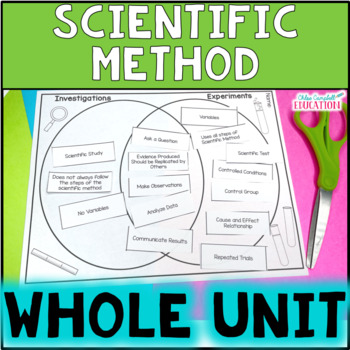
I teach my students that a science experiment involves variables and the comparing of results. However, a science investigation does not compare results or involve variables. Instead an investigation is more of a fact-gathering mission.
To bring this to life we complete the paper airplane challenge. We run this two times, once as an investigation and once as an experiment. It really helps students to see the difference. It also gives them a great opportunity to review those important vocabulary words and identify them in real investigations and experiments.
Because we are using so many different types of hands-on practice, I find my students grasping this concept quicker and more fully in a shorter amount of time. This makes the learning more fun and engaging for my students and way less frustrating for me in the long run.
These science investigation worksheets give students more practice with the full process.
Why Do Experiments Need Detailed Steps?
The last concept we dig into during our hands-on scientific method unit is the concept of replication. The students learn that in the scientific community, for an investigation or experiment to be considered valid, its results must be able to be replicated by others. This helps to prove the scientific conclusion and separate it from random, chance happenings.

I like to start by asking my students a question that everyone knows the answer to. It might be “How do you make a peanut butter and jelly sandwich?” or “How do you tie your shoe laces?” Anything that has steps but could be completed in different ways makes a great starting question. As we discuss how to complete these the students quickly learn that in order for something to have the exact same results, the same process needs to be followed.
From here we begin talking about how we can get a group of people to follow the same process. The answer is with very specific directions. And this leads us right into our need for details and specificity as we create and write about our science investigations and experiments.
But we don’t stop here! We jump right into some hands-on activities that help us practice writing with details. The students love then putting their writing to the test to see if their written instructions produce the desired result.
Ready for more? Try these 4th grade science experiments.
Teaching the scientific method is fun and easy with these fun hands-on activities
Pick one activity and try it this week. The foldable steps or the opinion vs observation sort are the easiest place to start tomorrow.
Don’t have time to make these yourself? I’ve done it for you. Grab this Nature of Science Unit Bundle and teach all of the concepts you’ve read about and more! Try these in your classroom and watch your little scientists grow!
Frequently Asked Questions
Ask a question, form a hypothesis, design a controlled experiment, collect and analyze data, and draw a conclusion. Keep the wording the same all year so students can rely on it. Foldable notes with a real experiment example help the steps stick.
An experiment tests a variable and compares results. An investigation gathers facts and observations without changing a variable or comparing results. Running the same paper airplane challenge both ways helps students see the difference.
An observation is something you can see, hear, measure or count. An opinion is what someone thinks or feels about it. Practicing with photos lets students sort the two before they write about real experiments.
Run a simple experiment where students can see all three, like testing what makes ice melt fastest. The thing you change is the independent variable, what you measure is the dependent variable, and everything you keep the same is controlled.
Pick one with cheap supplies and a quick result, like which paper towel absorbs the most water or what makes ice melt fastest. Students can finish the whole process in one or two class periods.
Want one experiment you can run tomorrow with textbooks and a ball? Grab the free ramp recording sheet below.
Pin it!
Love these hands-on scientific method activities? Save them to your favorite science Pinterest board and be sure to follow me for more upper elementary teaching ideas you will love!


 10 Science Activities: Science Experiments