How to manage Hands-on science experiments with elementary students
You put out the materials, you go over the directions, and then you turn your elementary students loose on the experiment. Two minutes in, you notice one group is just playing, so you head over to get them back on track. Somewhere behind you, you hear a plastic beaker go flying across the room. You turn around just in time to see a student trying to eat some of the materials AND when you are all done putting out the fires, you have an enormous mess to clean up. Sound about right? Managing elementary science experiments is no easy task! But, I’m here to tell you, it can be done!

Science Investigations and experiments management
When I first started doing science experiments in my elementary classroom, the only word I could use to describe them was….chaos! With so many students and materials to manage, it felt almost impossible for it to run smoothly. Over the years, I have found 4 management tools that revolutionized the way I approach hands-on experiments in my room!
Top tips for managing elementary science experiments
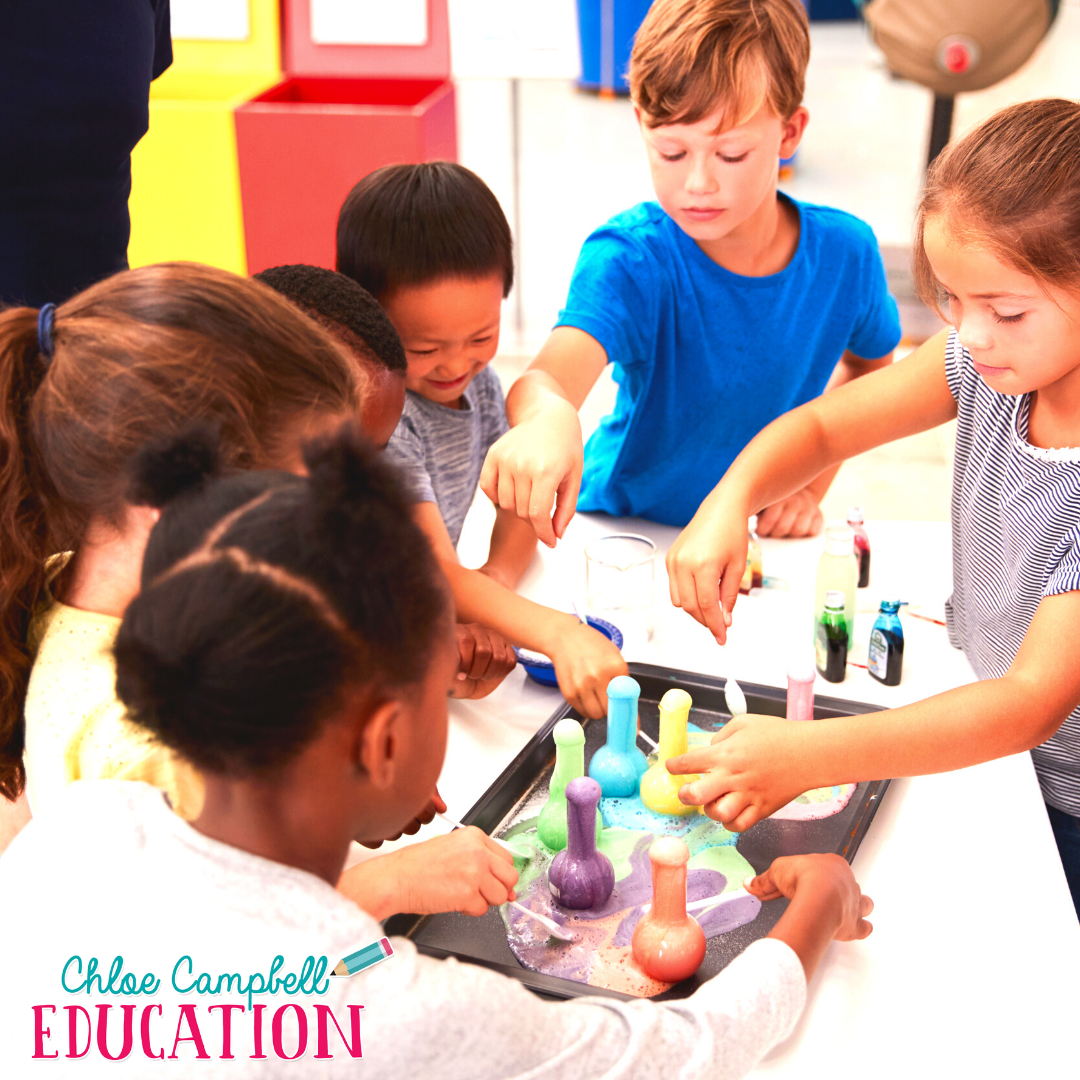
I always thought I was completely prepared to present science experiments to my students. I had picked an engaging activity, gathered all the materials, and carefully went over the directions.
Soon I realized, those basic steps of lesson planning were not enough to make the activity run smoothly. Here is what I found does help!
Tip #1: Give students time to explore materials
Build-in time to let your students play with the materials. Yes, you read that right. Let them play. I can’t believe it took me so long to recognize that my students needed this time.
By giving them time to explore, play with, and get acquainted with the materials you are using, there is less time wasted during the actual experiment time.
Plus, science is all about exploration, so giving your students this extra time helps them develop skills too! So, now I automatically build this time into my lesson planning.
Tip #2: Have small group sizes

Asking students to work in small groups is a great way to get everyone involved and foster a collaborative environment in your classroom. While this is not always possible due to supplies and expense, any time I can easily create more groups I do.
By dividing students into small groups each student is able to take an active role in the experiment. This will help limit downtime. When a student is not actively participating, they will fill their time in some other way. This can lead to those beaker flying and taste testing moments we all want to avoid.
Tip #3: try the experiment ahead of time
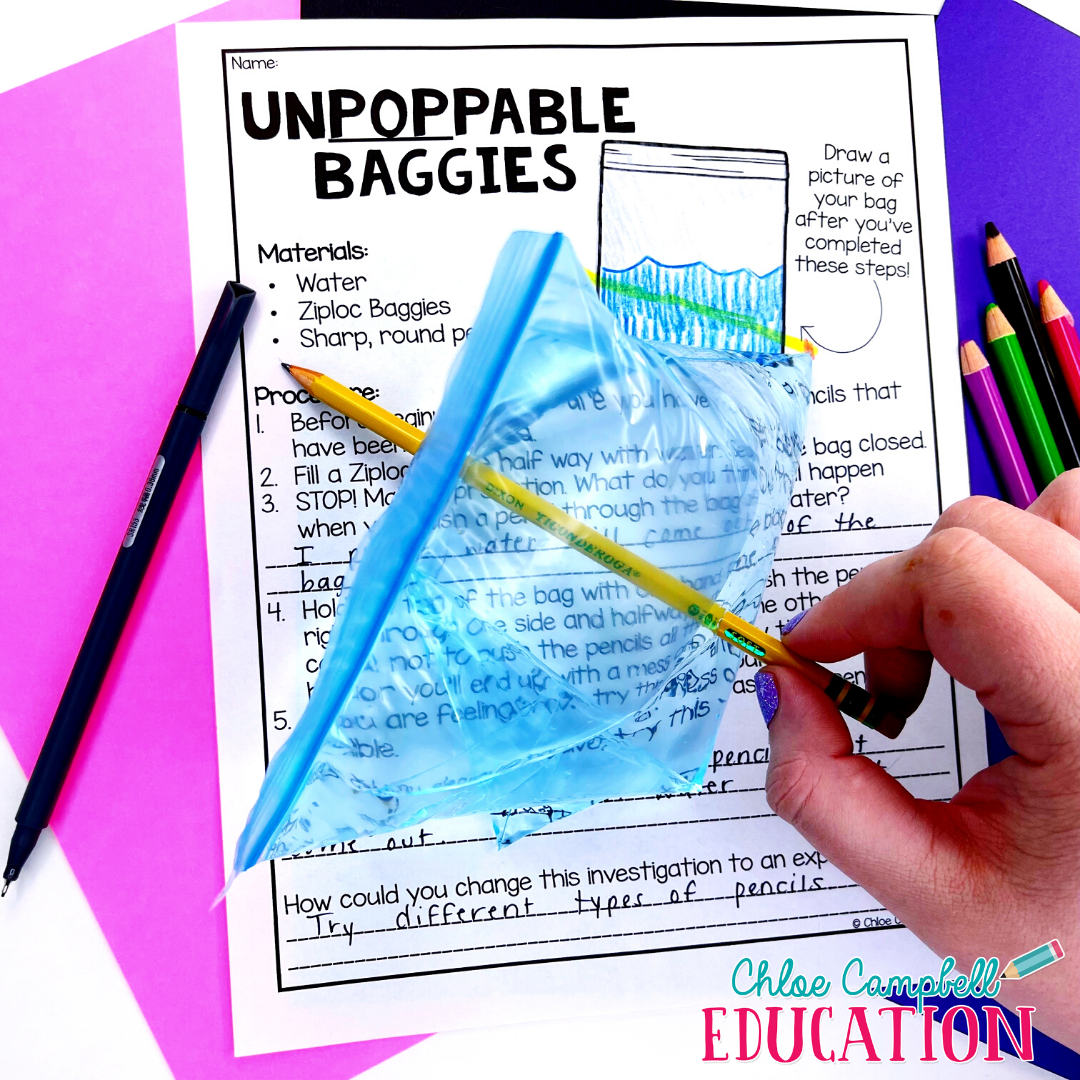
So, the experiment sounds great on paper. It must be good to go right?
That’s what I used to think too. But I was surprised how much more smoothly experiments went when I did the experiment myself ahead of time.
This allowed me to have a clear picture of what should happen during each step of the process and gave me a heads up on potential issues my students might run into.
Knowing these potential issues, I was able to tweak experiments to better fit my class.
Knowing what to expect also meant I would be able to help students while they were working on their experiments instead of having to go look at the directions or waste valuable time trying to figure it out on the fly. This management strategy has been a total game-changer for me!
Tip #4: choose the right activity

Ah, the bane of all teachers’ lessons: downtime. The goal with elementary science experiments is to keep the activity moving. Choosing experiments and investigations that don’t require students to wait too long before moving on to the next step is critical.
Make sure that the steps of the experiment are clear and easy
to understand so that students can move on independently without too much help from you. Limiting downtime means less time for students to be doing what they shouldn’t and more time learning.
Make elementary science experiments even easier!
Even though these tips for managing elementary science experiments will help make your lessons more successful, I know you already have so much on your plate! I want to help make incorporating science experiments into your classroom as easy as possible. That’s why I’ve put together this Science Investigations & Experiments BUNDLE to make including hands-on science activities in your classroom year-round a breeze!

These fun and easy experiments are great for teaching science procedures, modeling the scientific method, and introducing lab rules. Not to mention, with over 50 themed investigations and experiments that only use common household items, this bundle will make your life easier!
Pin it!
Love these ideas for managing elementary science experiments? Share them on Pinterest and follow me for more upper elementary teaching ideas!